-
![TRANS-DI(MU-ACETATO)BIS[O-(DI-O-TOLYLPHOSPHINO)BENZYL]DIPALLADIUM (II) CAS:172418-32-5](https://cdn.globalso.com/xindaobiotech/YMR4N0CXS3__VGFOZG82.png)
TRANS-DI(MU-ACETATO)BIS[O-(DI-O-TOLYLPHOSPHINO)BENZYL]DIPALLADIUM (II) CAS:172418-32-5
TRANS-DI(MU-ACETATO)BIS[O-(DI-O-TOLYLPHOSPHINO)BENZYL]DIPALLADIUM (II), Pd2(dba)3·CHCl3, is a coordination compound comprising two palladium atoms bridged by acetate ligands and coordinated with O-(di-o-tolylphosphino)benzyl ligands. It is recognized for its potential applications in catalysis and organic synthesis.
-
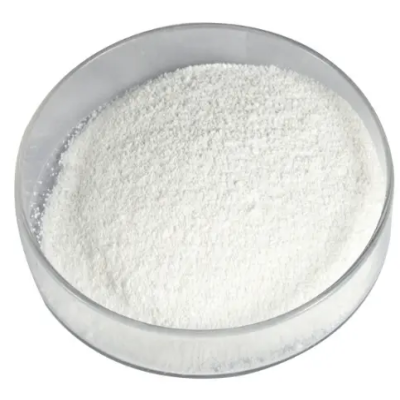
Ruthenium nitrosyl nitrate CAS:34513-98-9
Ruthenium nitrosyl nitrate, Ru(NO)(NO3)3, is a coordination complex consisting of ruthenium coordinated with nitrosyl and nitrate ligands. It is notable for its diverse applications in catalysis, particularly in oxidation and hydrogenation reactions.
-

Dichloro(p-cymene)ruthenium(II) dimer CAS:52462-29-0
Dichloro(p-cymene)ruthenium(II) dimer, RuCl2(p-cymene)]2, is a dimeric complex composed of ruthenium coordinated with p-cymene ligands and chloride ligands. It is recognized for its potential applications in catalysis and organic synthesis.
-
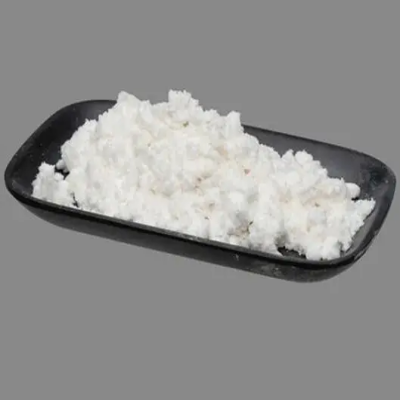
Dicarbonylacetylacetonato rhodium(I) CAS:14874-82-9
Dicarbonylacetylacetonato rhodium(I), Rh(acac)(CO)₂, is a coordination compound featuring rhodium coordinated with two acetylacetonate ligands and two carbonyl ligands. It is known for its role as a catalyst in various organic transformations.
-

(S,S)-N-(p-Toluenesulfonyl)-1,2-diphenylethanediamine(chloro)(p-cymene)ruthenium(II) CAS:192139-90-5
(S,S)-N-(p-Toluenesulfonyl)-1,2-diphenylethanediamine(chloro)(p-cymene)ruthenium(II) is a complex compound containing a ruthenium(II) center coordinated with a chiral ligand derived from 1,2-diphenylethanediamine, tosyl chloride, chloro ligand, and p-cymene. Its chemical formula is RuCl(p-cymene)(TsDPEN). This complex is utilized in asymmetric catalysis due to its ability to induce chirality in various reactions, particularly in asymmetric hydrogenation and other enantioselective transformations.
-
![((R,R)-2-AMINO-1,2-DIPHENYLETHYL)[(4-TOLYL)SULFONYL]AMIDO](P-CYMENE)RUTHENIUM(II)CHLORIDE CAS:192139-92-7](https://cdn.globalso.com/xindaobiotech/VYH6FUCIIBE_I7B6OOPY215.png)
((R,R)-2-AMINO-1,2-DIPHENYLETHYL)[(4-TOLYL)SULFONYL]AMIDO](P-CYMENE)RUTHENIUM(II)CHLORIDE CAS:192139-92-7
((R,R)-2-Amino-1,2-diphenylethyl)[(4-tolyl)sulfonyl]amido](p-cymene)ruthenium(II) chloride is a ruthenium complex featuring a chiral ligand comprising an amine, sulfonyl, and p-cymene groups, along with a chloride ligand. It is notable for its potential applications in asymmetric catalysis and organic synthesis.
-
![(BICYCLO[2.2.1]HEPTA-2,5-DIENE)CHLORORHODIUM(I) DIMER CAS:12257-42-0](https://cdn.globalso.com/xindaobiotech/20KKQ1ROFEVXI9DUBYB150.png)
(BICYCLO[2.2.1]HEPTA-2,5-DIENE)CHLORORHODIUM(I) DIMER CAS:12257-42-0
(BICYCLO[2.2.1]HEPTA-2,5-DIENE)CHLORORHODIUM(I) DIMER is a dimeric compound containing rhodium(I) centers coordinated with bicyclo[2.2.1]hepta-2,5-diene ligands and chloride ions. Its chemical formula is RhCl(bicyclo[2.2.1]hepta-2,5-diene)₂. This dimeric complex exhibits unique structural and electronic properties, contributing to its significance in organometallic chemistry and catalysis.
-

Carbonyltris(triphenylphosphine)rhodium(I) hydride CAS:17185-29-4
Carbonyltris(triphenylphosphine)rhodium(I) hydride is a complex compound consisting of rhodium(I) coordinated with three triphenylphosphine ligands and one carbonyl ligand. Its chemical formula is RhH(CO)(PPh₃)₃. This compound is widely used in organometallic chemistry due to its ability to serve as a versatile precursor for various catalytic reactions, particularly in hydroformylation and hydrogenation processes.
-
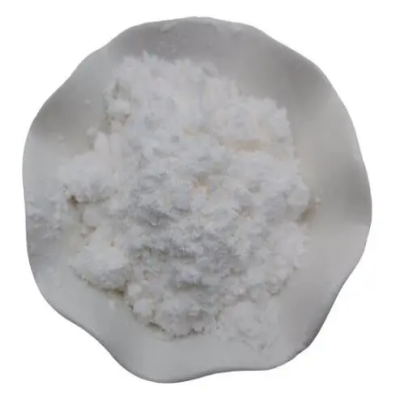
(Pentamethylcyclopentadienyl)iridium(III) chloride dimer CAS:12354-84-6
(Pentamethylcyclopentadienyl)iridium(III) chloride dimer is a dimeric compound featuring iridium(III) centers coordinated with pentamethylcyclopentadienyl ligands and chloride ions. Its chemical formula is Ir(C₅Me₅)Cl₂. This dimeric complex exhibits distinctive structural and electronic properties, rendering it significant in organometallic chemistry and catalysis.
-

Bis(triphenylphosphinepalladium) acetate CAS:14588-08-0
Bis(triphenylphosphinepalladium) acetate, Pd(PPh₃)₂(OAc)₂, is a coordination complex comprising palladium coordinated with two triphenylphosphine ligands and two acetate ligands. It is commonly employed as a catalyst in various organic transformations due to its ability to activate carbon-carbon and carbon-heteroatom bonds.
-
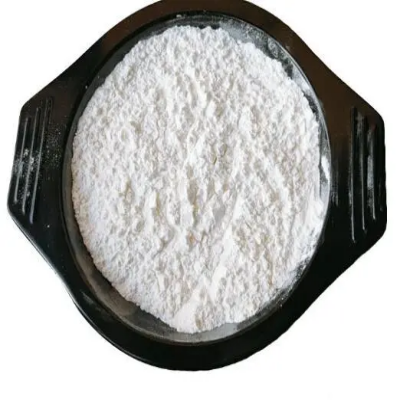
N,1-Dimethylcyclopentan-1-amine hydrochloride CAS:89854-72-8
N,1-Dimethylcyclopentan-1-amine hydrochloride is a significant compound utilized in pharmaceutical synthesis and chemical research. Its molecular structure consists of a cyclopentylamine derivative with two methyl groups attached to the nitrogen atom, forming a hydrochloride salt. These structural features offer unique properties essential for various synthetic endeavors. This compound demonstrates notable stability and reactivity, making it a valuable intermediate in the synthesis of diverse chemical compounds. Its structural characteristics enable the creation of complex molecular architectures, facilitating the development of novel pharmaceuticals and specialty
-
![Methyl 2-(S)-[N-Carbobenzyloxy]amino-3-aminopropionate Hydrochloride CAS:35761-27-4](https://cdn.globalso.com/xindaobiotech/YXWU15IWKSREIEIP2105.png)
Methyl 2-(S)-[N-Carbobenzyloxy]amino-3-aminopropionate Hydrochloride CAS:35761-27-4
Methyl 2-(S)-[N-Carbobenzyloxy]amino-3-aminopropionate Hydrochloride is a significant compound with versatile applications in pharmaceutical synthesis and chemical research. Its molecular structure comprises a methyl ester derivative of 2-amino-3-aminopropionic acid, with the amino group protected by a carbobenzyloxy (Cbz) group and forming a hydrochloride salt. These structural features offer unique properties essential for various synthetic endeavors. This compound exhibits notable stability and reactivity, making it a valuable intermediate in the synthesis of diverse chemical compounds. Its structural motifs enable the construction of complex molecular architectures, facilitating the development of novel pharmaceuticals and specialty chemicals.